
City
Palma de Majorca
Palma de Mallorca – the vibrant capital of the Balearic Islands – is a historic and cosmopolitan city located on the southwest coast of Mallorca. Home to around 420,000 residents, Palma blends medieval architecture, Mediterranean charm, and a lively cultural scene.
Overview & History
- Founded by the Romans in 123 BC as Palmaria, later flourishing under Byzantine and Moorish rule.
- Reconquered by King James I of Aragón in 1229, becoming an important Mediterranean trading hub.
- The city’s old town retains its medieval street plan, showcasing centuries of architectural influences.
- Known for its spectacular Gothic cathedral, grand palaces, and bustling harbour.
Main Attractions
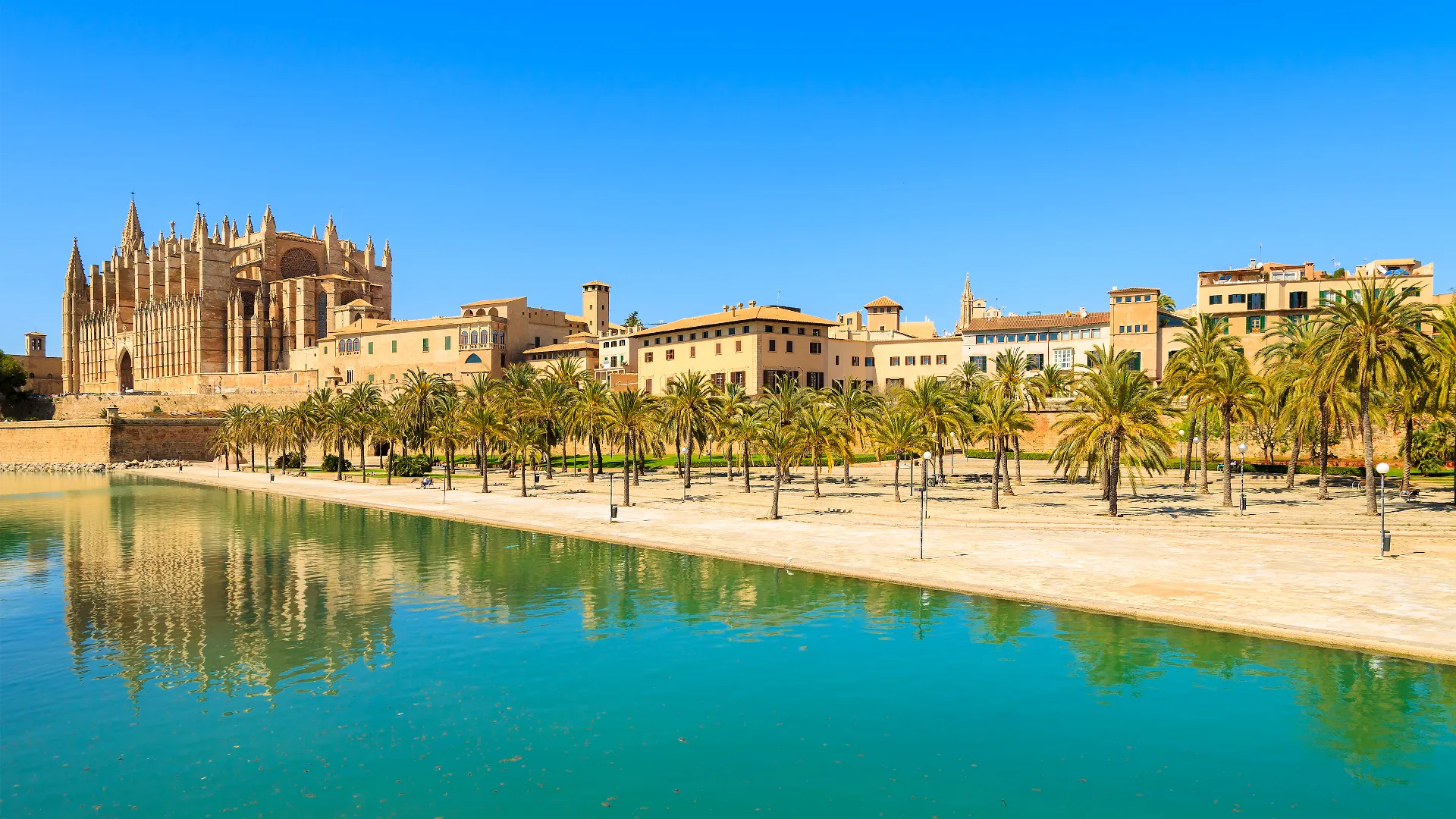
- La Seu Cathedral – iconic Gothic masterpiece overlooking the bay, with stunning stained glass and Gaudí-influenced details.
- Palau de l’Almudaina – former Moorish fortress turned royal palace.
- Bellver Castle – unique circular castle offering panoramic views over Palma and the coastline.
- Passeig des Born – elegant boulevard lined with boutiques, cafés, and galleries.
- Arab Baths – one of the few remnants of Palma’s Moorish past.
- Es Baluard Museum of Modern and Contemporary Art – showcasing works by Picasso, Miró, and Barceló.
Outdoor & Nature
- Palm-lined promenades along the harbour – perfect for cycling or evening strolls.
- Cala Major Beach and Ciudad Jardín for sunbathing and swimming within easy reach of the city centre.
- Day trips to the Serra de Tramuntana mountains, a UNESCO World Heritage site, for hiking and scenic drives.
- Picturesque boat trips around the Bay of Palma.
Markets & Local Cuisine
- Mercat de l’Olivar – bustling indoor market with fresh seafood, cheeses, and Mallorcan delicacies.
- Must-try dishes: sobrassada (cured sausage), ensaimada (spiral pastry), tumbet (vegetable casserole), and locally produced wines.
- Tapas bars and Michelin-starred restaurants offer something for every palate.
Festivals & Culture
- Sant Sebastià Festival (January) – concerts, bonfires, and street celebrations in honour of the city’s patron saint.
- Semana Santa (Holy Week) – solemn processions through the old town.
- Nit de l’Art (September) – contemporary art night across galleries and museums.
- Summer music festivals and open-air theatre performances in historic settings.
Getting There & Location
- Served by Palma de Mallorca Airport (PMI), around 10 km from the city centre.
- Excellent ferry connections to Barcelona, Valencia, Ibiza, and Menorca.
- Well-connected bus and train services to other parts of the island.
Travel Tips
- Best time to visit: April to June or September to October for pleasant weather and fewer crowds.
- Wear comfortable shoes for exploring the cobblestone streets of the old town.
- Reserve accommodation early during high season, especially in July and August.
Final Thoughts
Palma de Mallorca is more than just a gateway to the island – it’s a destination in its own right. With its rich history, vibrant cultural life, beautiful beaches, and world-class dining, it offers an irresistible mix of relaxation and sophistication for any traveller.