
Barcelona (City)
Called the ‘Paris of Spain’ by the famous Danish author Hans Christian Andersen. Barcelona is a major cultural, artistic, industrial and tourist hub in the Catalan province of Northern Spain.
Sandwiched between the scenic Pyrenees mountains and the Mediterranean, with an agreeable climate that fosters street life and featuring superb examples of Modernist art and architecture Barcelona has everything.
Bound by two rivers, the Besós and the Llobregat and an arc of inland mountains, Barcelona did not expand beyond its medieval walls until the 19th century, when industrial age towns and suburbs developed around the city centre. Now the largest in Catalonia, the second largest in Spain, and sixth largest in the European Union, Barcelona is an Alpha City. The 1992 summer Olympics saw vast regenerative infrastructural changes, including the creation of 3 km of sandy beaches in the city centre.
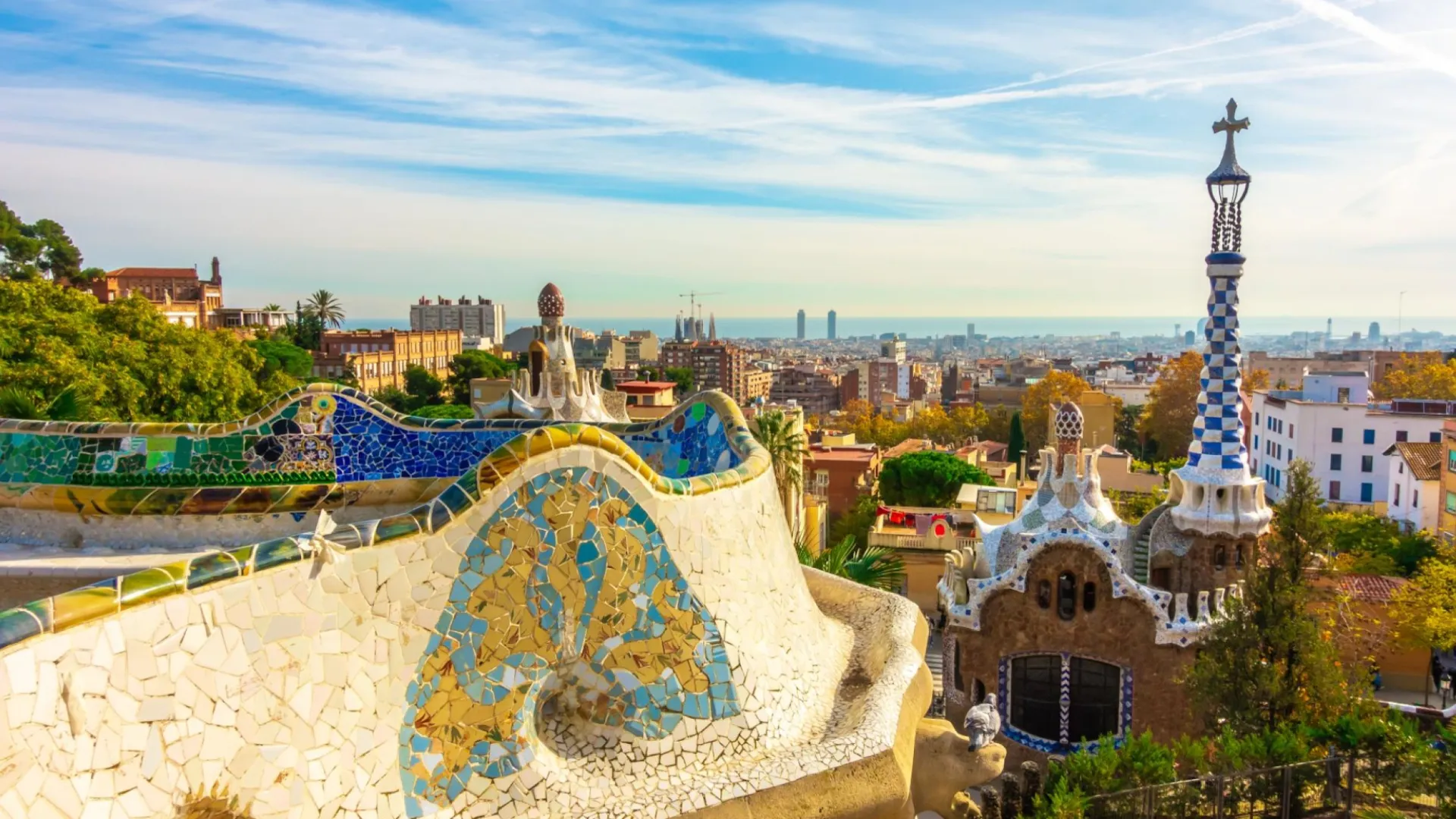
The escarpment of Montjuïc hosts Montjuïc Castle, a fortress built in the 17–18th centuries. Today, it houses a museum and is home to several sporting and cultural venues, as well as Barcelona’s biggest park and gardens. The Gran Teatre del Liceu is a renowned opera house on La Rambla — a long, tree-lined pedestrian street. The Barri Gòtic (Gothic Quarter) encompasses the old city of Barcelona. Catalan ‘modernista architecture’ left an important legacy, most famously, the unfinished church of the Sagrada Família, by Antoni Gaudi.
Mercat de Sant Josep de la Boqueria (La Boqueria) is a public market in the Ciutat Vella district of Barcelona which has existed since the 13th century, a feast for both the eyes and the appetite. Barcelona’s restaurant scene celebrates both international and local cuisine, with everything on offer from fast food, bistro cooking, beachside dining and bakeries. Spanish artists such as Picasso, Dalí, Miro and Velázquez and many others, feature in public spaces plus there are plenty of museum collections spanning medieval times to the current.